





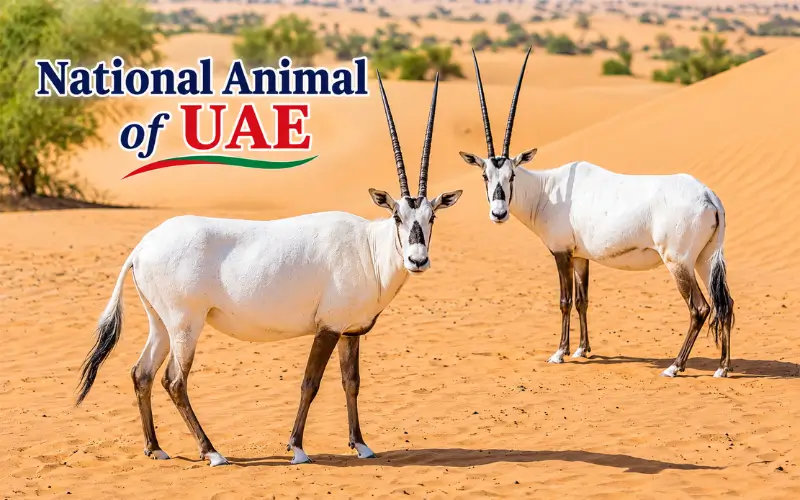
Arabian Oryx is the national animal of the United Arab Emirates (UAE). This white antelope represents the country’s desert environment, native wildlife,e and commitment to protecting endangered species. It has long, straight horns, a white coat, and dark markings on its face and legs. The Arabian Oryx once faced extinction in the wild because of hunting and habitat loss. However, conservation programmes helped restore its population. Today, the UAE has the world’s largest population of Arabian Oryx, with more than 6,900 individuals, according to the Environment Agency – Abu Dhabi. Most live in protected desert areas, where conservation teams monitor their numbers and protect their habitats.
What Is the National Animal of UAE?
The Arabian Oryx (Oryx leucoryx) is the national animal of the UAE. It belongs to the antelope family and naturally lives in the dry desert regions of the Arabian Peninsula. People also call it the White Oryx because most of its body has a pale white coat.
In the UAE, the animal represents desert life, strength, and wildlife conservation. Its ability to survive in harsh conditions makes it an important part of the country’s natural heritage.
You can recognise the Arabian Oryx by these features:
- White body with dark facial and leg markings.
- Two long horns, usually straight or slightly curved.
- Broad hooves that help it walk across loose sand.
The animal also has the local name W’Dhehi. Its scientific name, Oryx leucoryx, helps researchers identify it in wildlife records and conservation studies.
Why Is the Arabian Oryx the National Animal of the UAE?
The Arabian Oryx represents the UAE’s connection with its desert environment and traditional wildlife. Before modern cities and large developments changed the landscape, desert animals formed an important part of the Arabian Peninsula’s natural surroundings.
The oryx became especially important because it can survive with limited rainfall, little vegetation, and high temperatures.
Its history also reflects the UAE’s efforts to protect native wildlife. During the 20th century, hunting and habitat loss caused its population to fall sharply. The species eventually disappeared from the wild, making conservation work essential.
The UAE supported breeding and reintroduction programmes to return the animal to its natural environment. These efforts helped increase its population and improve its conservation status.
The Arabian Oryx represents several important values:
- Desert heritage: It reflects the wildlife of the Arabian Peninsula.
- Strength and survival: Its body helps it cope with harsh conditions.
- Wildlife protection: Its recovery highlights the value of conservation.
Its story also helps residents and visitors understand why the UAE needs to protect its native species.
What Does the Arabian Oryx Look Like?
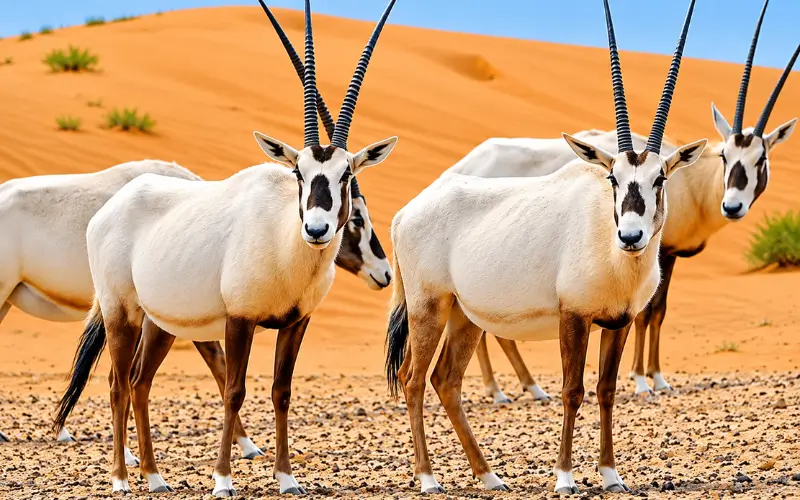
The Arabian Oryx has a distinctive appearance that makes it easy to recognise. Its body is mostly white, while its face and lower legs have darker markings. These colours stand out against the sandy desert landscape.
Both male and female oryx have long horns. Males generally have thicker and shorter horns, while females tend to have thinner and longer ones. Their broad hooves also help them walk across soft sand without sinking easily.
Size, Weight and Physical Features
The Arabian Oryx is a medium-sized antelope. An adult can weigh up to 80 kilograms, although its weight varies according to age, sex and physical condition.
It has a strong body, a relatively short neck and long legs. These features help it travel across open desert areas while looking for food and suitable shelter.
| Physical feature | Description |
| Scientific name | Oryx leucoryx |
| Animal type | Antelope |
| Body colour | Mostly white |
| Face markings | Dark brown or black |
| Weight | Up to 80 kg |
| Horns | Long and straight or slightly curved |
| Hooves | Broad and suitable for soft sand |
| Local name | W’Dhehi |
Horns, Coat and Distinctive Appearance
The horns are among the Arabian Oryx’s most recognisable features. They grow from the top of its head and usually appear straight or slightly curved. Both males and females have horns, which help distinguish this species from several other antelopes.
Its white coat also suits the open desert environment. Dark markings around its face and legs create a clear contrast with its lighter body. This distinctive appearance makes the animal easy to identify in photographs and wildlife reserves.
Where Does the Arabian Oryx Live in the UAE?
The Arabian Oryx mainly lives in desert environments across the Arabian Peninsula. In the UAE, protected areas in Abu Dhabi provide important habitats where the animals can move, feed, and reproduce.
The Environment Agency – Abu Dhabi identifies Qasr Al Sarab Protected Area and the Arabian Oryx Protected Area among the main places where the species roams today. These protected environments support native wildlife and help reduce threats from human activities.
Natural Desert Habitat
Arabian Oryx prefer open desert landscapes with dunes, gravel plains, and scattered vegetation. They can travel long distances to find plants, especially after rainfall. These areas provide natural food sources and enough space for herds to move.
Their habitat does not always have permanent water sources. They rely on moisture from their food and use natural adaptations to cope with dry conditions.
Their natural habitat includes:
- Sandy deserts with dunes and open plains.
- Gravel areas with scattered desert plants.
- Seasonal regions where rainfall supports fresh vegetation.
Protected Areas and Wildlife Reserves
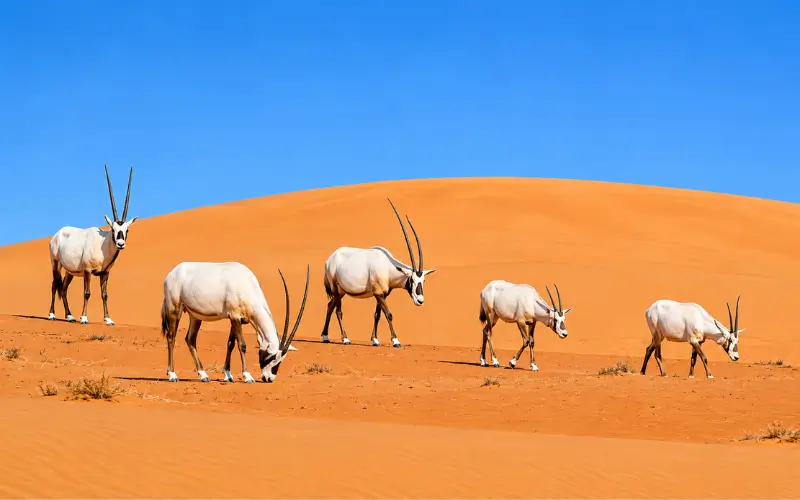
The UAE has created protected areas to conserve native wildlife and maintain natural habitats. These areas give Arabian Oryx safer places to live and allow conservation teams to monitor their populations.
The Arabian Oryx Protected Area plays an important role in protecting the species. Qasr Al Sarab also forms part of the desert landscape where the animal lives.
Visitors should check access rules before planning a visit. Some protected areas have restrictions and do not operate like ordinary public parks. Depending on the location, visitors may need permission to enter.
What Does the Arabian Oryx Eat?

The Arabian Oryx is a herbivore, which means it eats plants rather than meat. Its diet mainly includes grasses, leaves, herbs, and other vegetation that grows in desert areas.
Food availability changes with the seasons. After rainfall, fresh plants begin to grow and provide more food. The oryx travels across large areas to find vegetation, especially when dry weather reduces available food.
Its diet generally includes:
- Desert grasses and fresh shoots.
- Leaves, herbs,s and small plants.
- Vegetation that grows after seasonal rainfall.
The Arabian Oryx uses its strong mouth and teeth to eat different types of desert plants. This flexible diet helps it survive in areas where food is not always available throughout the year.
The animal also gets moisture from the plants it eats. This reduces its need to find open water sources, particularly during dry periods.
How Does the Arabian Oryx Survive in the Desert?
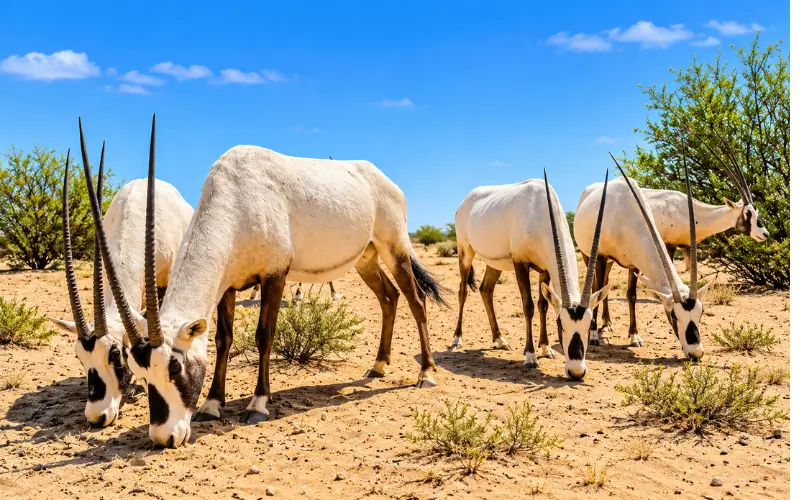
The Arabian Oryx has natural adaptations that help it survive in the hot, dry Arabian desert. It can tolerate high temperatures, walk across sandy ground, nd and find food in areas with limited vegetation.
Unlike animals that need regular access to drinking water, the oryx gets moisture from the plants it eats. Its body also helps manage heat and cope with extreme temperatures.
Adaptation to Extreme Heat
The animal has a special blood circulation system in its head that helps regulate its body temperature. This adaptation supports its survival in hot surroundings.
Its light-coloured coat helps it cope with direct sunlight, while its broad hooves make walking across soft sand easier. These features allow it to search for food across large desert areas.
The Arabian Oryx also changes its activity according to the weather. During extremely hot periods, it may move less and look for shade. It can become more active when temperatures drop.
How Long Can It Survive Without Water?
The Arabian Oryx can survive for long periods without drinking water because it gets much of the moisture it needs from desert plants. Its diet includes grasses, leaves, and herbs, which help it stay hydrated.
This adaptation allows the Arabian Oryx to live in desert conditions where water sources are scarce. However, it still needs access to suitable vegetation to meet its water and nutritional needs.
History of the Arabian Oryx in the UAE
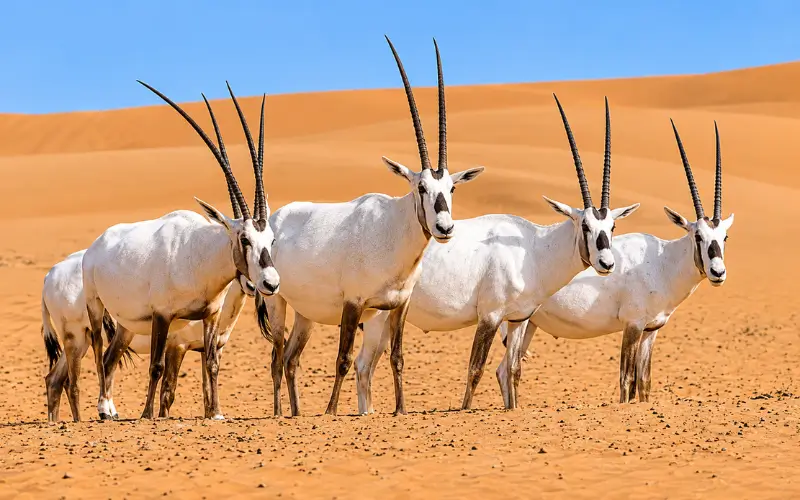
The history of the Arabian Oryx is closely linked to wildlife conservation in the UAE. For centuries, the animal lived across the Arabian Peninsula, including areas that now form part of the United Arab Emirates.
Its population began to decline as hunting increased and natural habitats changed. Hunters targeted the species for its meat and hides, while development reduced the space available for wildlife.
By the early 1970s, the Arabian Oryx had disappeared from the wild. This raised serious concerns among conservationists and encouraged efforts to save the remaining animals through breeding programmes.
Why Did the Arabian Oryx Become Extinct in the Wild?
Uncontrolled hunting was one of the main reasons behind the Arabian Oryx’s decline. People hunted the animal for its meat and skin. Modern hunting equipment also made it easier to target wild herds.
Habitat loss created another problem. Construction and development changed parts of the natural desert environment and reduced suitable areas for the species.
The main threats included:
- Overhunting: Reduced wild populations.
- Habitat loss: Limited suitable desert areas.
- Small populations: Increased risks for remaining groups.
The last wild Arabian Oryx disappeared in the early 1970s. However, some animals survived in captivity and private collections. These animals gave conservationists a chance to rebuild the population through breeding programmes.
Sheikh Zayed’s Role in Saving the Arabian Oryx
The late Sheikh Zayed bin Sultan Al Nahyan, the founding father of the UAE, supported wildlife protection and conservation initiatives. He understood the importance of protecting native animals and preserving the country’s natural heritage.
After the Arabian Oryx disappeared from the wild, Sheikh Zayed supported programmes to breed and protect the remaining animals. These efforts helped create the foundation for later reintroduction projects.
His conservation vision also encouraged cooperation between wildlife experts, environmental organisations and government authorities. The UAE continued this work through programmes that aimed to return the species to suitable natural habitats.
His contribution remains an important part of the Arabian Oryx’s recovery story.
Arabian Oryx Reintroduction Programme
The UAE took another important step in 2007 when the Sheikh Mohamed bin Zayed Arabian Oryx Reintroduction Programme began. The programme aimed to return the animal to parts of its historical range and establish populations that could survive in natural desert conditions.
In February 2007, conservation teams released 98 Arabian Oryx into the wild in the Um Al Zomoul area of Abu Dhabi. Experts monitored the animals and prepared the release sites with suitable food, water, and shelter.
The programme focused on three main activities:
- Breeding: Preparing healthy animals for release.
- Monitoring: Tracking their health and movements.
- Habitat protection: Supporting the growth of wild populations.
The programme helped return the Arabian Oryx to its natural environment and became an important example of wildlife conservation in the region.
Is the Arabian Oryx an Endangered Animal?
The Arabian Oryx currently holds Vulnerable status on the International Union for Conservation of Nature (IUCN) Red List. This means the species still faces a risk of extinction in the wild, although its conservation status has improved.
In the past, hunting and habitat loss caused the species to disappear from the wild. Captive breeding, habitat protection and reintroduction programmes helped rebuild its numbers.
The UAE now supports one of the world’s most important Arabian Oryx populations. The Environment Agency – Abu Dhabi reports more than 6,900 individuals in the country. This shows the progress of conservation work, but the species still needs protection.
Several issues require continued attention:
- Habitat protection from harmful activities.
- Prevention of illegal hunting and disturbance.
- Population monitoring and healthy breeding groups.
Continued conservation work will help protect the species for future generations.
Arabian Oryx vs Camel: What Is the Difference?
The Arabian Oryx and camel are both closely associated with desert life in the UAE. However, they have different physical features, diets, and roles in the natural environment.
The camel has supported communities across the Arabian Peninsula through transport, milk, meat,t and trade. The Arabian Oryx, on the other hand, represents native desert wildlife and conservation.
| Feature | Arabian Oryx | Camel |
| Animal type | Antelope | Camelid |
| Scientific name | Oryx leucoryx | Camelus dromedarius |
| Body covering | Mostly white coat | Usually brown or sandy coat |
| Main feature | Long, straight horns | One hump |
| Diet | Grasses, leaves, and desert plants | Grasses, shrubs and desert vegetation |
| Main association | Wildlife and conservation | Traditional transport and livelihood |
| Natural role | Native desert herbivore | Domesticated desert animal in the UAE |
The Arabian Oryx is the national animal, while the camel remains an important part of Emirati culture and traditional life. Both animals represent different parts of the country’s desert heritage.
Interesting Facts About the Arabian Oryx
The Arabian Oryx has several unusual features that make it one of the most interesting animals in the Arabian Peninsula. Its desert adaptations, behaviour and recovery from extinction have attracted the attention of wildlife researchers.
Here are some interesting facts:
- Rain detection: Rainfall and fresh plant growth from up to 90 kilometres away.
- Early movement: A newborn can stand and walk within about one hour.
- Heat regulation: A special circulation system in its head helps keep it cool.
- Desert movement: Broad hooves help it cross soft sand.
- Distinctive horns: Both males and females have long horns.
These features help explain how the species adapted to the difficult conditions of the Arabian desert.
Importance of the Arabian Oryx in UAE Culture and Heritage
The Arabian Oryx has an important place in the UAE’s natural and cultural heritage. Its connection with the desert makes it a recognisable symbol of the country’s wildlife and environment.
For generations, people in the Arabian Peninsula have lived alongside desert animals and learned to cope with challenging natural conditions. The oryx represents this relationship between people, wildlife and the desert.
Its recovery also reflects the UAE’s interest in protecting native species. The work of Sheikh Zayed and later conservation programmes helped make wildlife protection an important part of the country’s environmental efforts.
Today, the animal features in wildlife education, conservation activities and discussions about the UAE’s natural heritage. Its story also teaches younger generations about hunting, habitat loss and the need to protect endangered animals.
Arabian Oryx Conservation Efforts in the UAE
The UAE continues to protect the Arabian Oryx through breeding programmes, habitat management and wildlife monitoring. The Environment Agency – Abu Dhabi plays an important role in these efforts.
The Sheikh Mohamed bin Zayed Arabian Oryx Reintroduction Programme works to establish healthy populations in suitable natural habitats. It also supports cooperation between conservation organisations across the Arabian Peninsula.
The UAE Ministry of Climate Change and Environment also supports wider biodiversity initiatives, including programmes that protect endangered wildlife.
Current conservation activities focus on:
- Habitat protection: Maintaining safe desert areas.
- Population monitoring: Tracking numbers, health, and movement.
- Breeding and reintroduction: Supporting healthy wild populations.
- Public awareness: Teaching people about wildlife protection.
These efforts have helped the Arabian Oryx recover from extinction in the wild. However, habitat changes and other environmental pressures can still affect its future, so continued protection remains important.
read as: Al Rashidiya Park Dubai: Location, Timings, Facilities & Things to Do
Final Thoughts
The Arabian Oryx is more than just the national animal of the UAE. It represents the country’s desert heritage, natural wildlife, and commitment to protecting endangered species. Hunting and habitat loss once pushed the animal towards extinction, but dedicated conservation programmes helped bring it back to the wild.
Today, the UAE continues to protect the Arabian Oryx through breeding projects, wildlife reserves, and habitat conservation. Its recovery shows how long-term conservation work can protect endangered animals and preserve biodiversity. By protecting this remarkable antelope, the country also safeguards an important part of its natural heritage for future generations.
Frequently Asked Questions
What is the national animal of the UAE?
The Arabian Oryx is the national animal of the UAE. This white antelope has long horns, dark facial markings,s and natural adaptations that help it survive in desert environments.
Is the camel the national animal of the UAE?
No. The Arabian Oryx is the national animal. However, the camel remains an important part of Emirati heritage because of its historical role in transport, food, and traditional desert life.
What is the scientific name of the Arabian Oryx?
Its scientific name is Oryx leucoryx. It belongs to the antelope family and naturally lives in the Arabian Peninsula.
How many Arabian Oryx are there in the UAE?
The Environment Agency – Abu Dhabi reports more than 6,900 Arabian Oryx in the UAE. Population figures can change as conservation teams conduct new surveys and monitor existing groups.
Where can you see Arabian Oryx in the UAE?
Arabian Oryx mainly roam protected desert areas in Abu Dhabi, including Qasr Al Sarab Protected Area and the Arabian Oryx Protected Area. Check access rules before travelling because some protected areas require special permission.
Why is the Arabian Oryx important to Emirati heritage?
The Arabian Oryx represents the UAE’s desert environment, native wildlife, and conservation history. Its recovery also reflects Sheikh Zayed’s efforts and the country’s commitment to protecting endangered species.
Can Arabian Oryx survive without drinking water?
The Arabian Oryx can survive for extended periods without directly drinking water. It gets moisture from the plants it eats and adapts to desert conditions. However, its water needs still depend on the environment and food supply.