


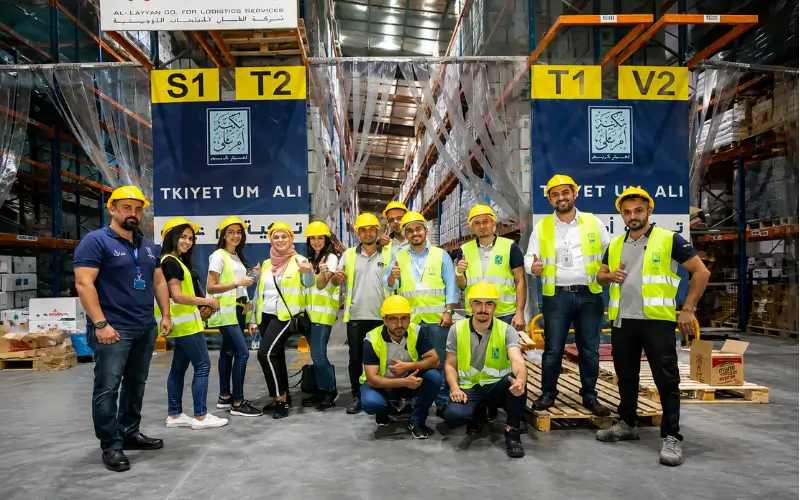
EFS Facilities Services Group offers full facilities management services for contemporary companies. The company supports businesses in managing buildings, maintenance, and workplace operations efficiently. It provides technical services, soft services, consultancy, and integrated FM services. EFS can be used in various sectors like offices, healthcare, education, hospitality, and government facilities. The company operates in several regions, specializing in enhancing building performance, minimizing operational issues, and making work environments safer. It offers solutions to help optimise the efficiency, reliability, and management of its facilities.
Quick Facts
| Category | Details |
| Company Name | EFS Facilities Services Group |
| Industry | Facilities Management Services |
| Core Expertise | Integrated Facilities Management, Technical Operations, Soft Services, Consultancy |
| Regional Presence | Middle East, Africa, South Asia, Turkey |
| Service Portfolio | 75+ service lines across multiple sectors |
| Headquarters | Dubai, UAE |
| Main Focus | Improving asset performance, workplace efficiency, and service quality |
What Is EFS Facilities Services Group?
EFS Facilities Services Group is an integrated facilities management provider, offering end-to-end solutions for complex buildings and infrastructure management. An integrated FM approach, with maintenance, cleaning, engineering, and workplace services all under one service partner, is far more efficient than having to contend with several different vendors to meet each of these needs.
The company works with a structured and organized service model, one of the key points of which is:
- Facility performance improvement
- Preventive maintenance strategies
- Operational cost control
- Ensure safety and compliance in the workplace
- Asset lifecycle management
- Customer experience enhancement
Facilities management is no longer just about maintaining buildings; it’s about strategic business operations. FM providers are playing an increasing role in the ability of companies to run their buildings efficiently, without compromising on health, safety, environment, and sustainability standards.
EFS Group aims to occupy this evolving FM environment, leveraging expertise and technology-based management solutions and industry-specific solutions.
EFS Facilities Services Group Location
EFS Facilities Services Group is headquartered in Dubai, United Arab Emirates, with its main office located in Dubai Production City (IMPZ), Sheikh Mohammed Bin Zayed Road. The location supports the company’s regional operations and management activities across multiple markets. From this Dubai base, EFS delivers integrated facilities management, technical services, and workplace solutions to organizations across different industries.
History and Growth of EFS Group
EFS Facilities Services Group (EFS) was founded as a facilities management (FM) provider and grew into a regional FM provider that operates across several markets. The company expanded its technical services, soft services, consultancy, and facility solutions offerings over the years.
As an indicator of a growing need for professional facilities management in emerging markets, the number of EFS is increasing. The growth of cities and the increased complexity of commercial structures require organizations to have access to specialized providers that can handle large buildings, mixed-use developments, industrial properties, and corporate locations.
EFS has established operations and provided services in various countries and utilises regional operating companies to run a diverse suite of service operations, according to the company.
The company has been expanding due to several reasons:
- The increasing need for outsourced facility management services.The surge in outsourced facility management services.
- Growing emphasis on workplace safety and sustainability issues.Greater attention to the matters of workplace safety and sustainability.
- Need for specialized technical maintenance.
- Incorporation of integrated service delivery models
How EFS Integrated Facilities Management Works
An Integrated Facilities Management (IFM) model integrates various pieces of facility-related services in a coordinated model. This not only simplifies work in the organization, but also allows for multiple operational requirements to be under one roof.
Traditionally, facility management contracts are split into multiple agreements for:
- Mechanical maintenance
- Electrical systems
- Cleaning services
- Security
- Landscaping
- Workplace support
An integrated approach brings these functions together with common processes, reporting systems, performance indicators and management systems.
EFS offers comprehensive FM solutions that are tailored to the client’s needs, industry norms and operational goals. It offers a range of services such as technical operations, soft services, consultancy and project management support.
Benefits of an Integrated FM Approach
When companies select integrated facilities management, they can gain several benefits:
- Improved team working and joint planning between service teams
- Improved response times
- Clearer performance tracking and monitoring.
- Reduced administrative workload
- Improved maintenance schedule management.Improved maintenance schedule control.
- Improved facility reliability
Integrated FM can help achieve consistency throughout multiple properties for larger organisations and keep operational standards.
Core Services Offered by EFS Facilities Services Group
EFS offers a variety of facility products for various industries and conditions. The company has a number of different service lines.
Facilities Management Services
EFS’ main service area is the management of total facility operations. This will involve co-ordinating resources, monitoring performance, keeping standards of service, and ensuring that facilities are kept to agreed standards.
The following are the common facilities management services:
- Asset management
- Vendor coordination
- Helpdesk management
- Quality assurance
- Compliance monitoring
- Performance reporting
EFS places a high value on a customer-centric method in which solutions for facilities are tailored to the company’s goals, not just the operational needs.
Facilities management is essential in ensuring that an organisation has productive workplaces and productive use of its physical assets.
Technical Operations and Maintenance
One of the most crucial aspects of professional FM services is technical maintenance. Complex systems that support buildings include:
- The HVAC system is an integral part of the home. Heating, ventilation, and air conditioning (HVAC) are a vital component of the house.
- Electrical systems
- Plumbing networks
- Fire protection systems
- Building automation systems
EFS offers technical operations and maintenance services to ensure the buildings operate reliably. The services are aimed at preventive maintenance, engineering assistance, and minimizing unplanned equipment failures.
Importance of Preventive Maintenance
Preventive maintenance not only enables organisations to discover potential issues early, but it also prevents them from becoming costly failures.
A robust maintenance programme can:
- Increase equipment lifespan
- Reduce emergency repairs
- Improve energy efficiency
- Support safety compliance
- Maintain occupant comfort
In commercial buildings and industrial facilities, having reliable technical maintenance directly affects business continuity.
Soft Services
Soft services are related to the human experience of a facility. A clean, comfortable, and safe work environment, and overall quality in the workplace are enhanced by these services.
EFS provides soft services to commercial, residential, and corporate properties.
Common soft facility services are:
- Cleaning and housekeeping
- Workplace support services
- Specialized cleaning solutions
- Environmental services
A successful soft services program can help improve the satisfaction of employees and provide better, healthier conditions for building users.
FM Consultancy and Advisory Services
In addition to day-to-day operations, organizations may require expert guidance when developing a strategy for their facilities or enhancing their facility systems.
EFS offers businesses FM consultancy and advisory services to assess the challenges, optimize processes, and plan for operations.
Consultancy can assist with:
- Facility optimization
- Operational planning
- Service design
- Performance improvement
- Project strategy
This advisory approach enables businesses to make informed decisions before large-scale changes are made in their facility.
EFS Facilities Services Group Across Different Industries
To be able to do a good job in modern facilities management, industry-specific knowledge is needed because all industries have different operational needs. The demands of a hospital are stringent and demand a high level of hygiene control and critical systems reliability, whereas a corporate office demands to deliver services to people and to promote workplace efficiency. EFS Facilities Services Group offers facility solutions to various sectors, bringing together technical knowledge and industry-specific working practices.
It caters to businesses in the commercial, government, healthcare, education, hospitality, retail, banking, and industrial industries. Different models of services, standards of compliance, and performance expectations are needed for each sector.
Commercial Real Estate and Corporate Facilities
Satisfied tenants and the preservation of building value are essential for commercial buildings to run effectively. Lack of maintenance, as well as delayed maintenance or building systems that are not efficient, can directly impact business operations.
Commercial facilities are supported by EFS in the following ways:
- Building maintenance management
- Engineering operations
- Workplace services
- Asset performance monitoring
- Facility compliance support
Professional FM providers can help develop effective workplaces for office buildings and corporate campuses, enabling workers to work comfortably and safely.
Healthcare Facilities Management
The operational control that is required in healthcare facilities is one of the highest, as equipment reliability, hygiene, and safety have a direct impact on the care of the patients.
Some special requirements in healthcare facility management are:
- Critical environment maintenance
- Infection prevention support
- Equipment reliability
- Strict cleaning protocols
- Regulatory compliance
A professional FM partner supports healthcare organizations to concentrate on medical services while helping them ensure that their buildings are in operation and compliant.
Hospitality and Tourism Facilities
Hotels, resorts and tourism facilities are very competitive in the area of customer experience. Guest satisfaction is affected by facility performance, for example in terms of cleanliness, comfort, temperature control and service reliability.
Hospitality facilities management is about maintaining:
- Guest areas
- Back-of-house operations
- HVAC systems
- Electrical infrastructure
- Public spaces
EFS offers operational support to ensure quality service standards are upheld throughout the properties.
Education Facilities
Schools, universities and educational campuses need a safe and efficient environment for students, teachers and staff.
In education, facility management involves:
- Building maintenance
- Cleaning services
- Safety management
- Energy efficiency
- Campus operations
A well-managed education facility provides improved learning environments and minimises disruption to operations.
Government and Public Sector Facilities
Government buildings frequently have strict security, compliance and service requirements. Professional FM companies can support public organisations to control complicated buildings and ensure there is transparency in operations.
Services may include:
- Technical maintenance
- Facility operations
- Asset management
- Support services
- Compliance reporting
EFS has been working with organizations with structured facility solutions in a variety of operational situations.
Technology and Digital Transformation in Facilities Management
Building management has been transformed due to technology. In the past, maintenance was largely done based on the human experience and intuition, but now it is shifting toward data-driven facility management systems that offer real-time information and decision-making.
Modern facility management technology can include:
- Computers that are used for maintenance management systems are known as Computerized Maintenance Management Systems (CMMS).
- Computer-Aided Facility Management (CAFM)
- Internet of Things (IoT) sensors
- Digital reporting platforms
- Smart building technologies
These technologies enable facility teams to keep track of assets, schedule maintenance, track performance, and detect operational issues before they become a problem.
CAFM and Data-Based Facility Operations
With CAFM systems, facility managers can structure information on buildings, assets, maintenance work orders, and maintenance activities.
An FM system using a digital platform can enhance:
- Maintenance planning
- Response time
- Documentation accuracy
- Performance tracking
- Decision-making
Centralized data management provides a greater level of visibility across facilities for large organizations managing multiple properties.
Smart Buildings and IoT Integration
Connected devices and sensors capture the data of a building’s operation through smart building technologies.
Examples include:
- Energy monitoring systems
- Automated lighting controls
- Occupancy sensors
- Equipment performance monitoring
These solutions are aimed at enhancing energy efficiency and lowering the unearned running expenses of organizations.
Another trend in facilities management is predictive maintenance, which uses data analysis to anticipate potential equipment failures before they happen to prevent downtime.
Sustainability and Energy Efficiency in Facilities Management
Organizations globally have placed sustainability right on their agenda. Energy and resources are high costs of buildings, and effective facility management is crucial in minimizing the environmental cost of buildings.
An FM provider can help with sustainability by:
- Energy optimization
- Waste management
- Resource efficiency
- Sustainable maintenance practices
- Environmental monitoring
Green facilities management is about balancing the performance of a facility and its environmental responsibility.
Role of FM Companies in Sustainable Operations
By enhancing building performance, a facility management partner can help organizations reach their sustainability targets.
Examples include:
- Optimizing HVAC operation
- Saving Energy for Unnecessary Purposes
- Maintaining efficient equipment
- Supporting environmental standards
These enhancements can help reduce operating costs and achieve corporate sustainability goals.
Why Businesses Choose EFS Facilities Services Group
Choosing a facilities management provider is a strategic decision as facility performance has an impact on productivity, safety, and operating costs.
An organization will look at an FM partner’s experience, service capabilities, technology integration, and complex operation handling abilities.
Integrated Service Delivery
The primary benefit of an integrated FM model is to eliminate complexity. Organizations can coordinate services with one experienced provider rather than having to deal with several contractors one-by-one.
This can be enhanced by:
- Communication
- Accountability
- Reporting
- Service consistency
Regional Experience and Operational Scale
Providers with the necessary resources, trained staff, and experience in operating on a large scale are needed for large-scale facilities.
EFS has established a regional footprint in several markets, where it meets the needs of a variety of facility requirements.
Focus on Quality and Performance Management
Performance indicators are used by professional FM providers to assess service delivery.
Some of the most common FM performance measurement indicators are:
- Response times
- The percentage of preventive work completed. Percent of preventive maintenance completed.
- Service quality scores
- Equipment uptime
- Customer satisfaction levels
Performance-based management promotes uniformity of facilities.
EFS Facilities Services Group vs Traditional Facility Management
Typical models of facility management are based on service provision from different suppliers. This can present difficulties like communication problems, quality control issues, and administrative burdens.
An integrated FM approach is a more coordinated alternative.
| Traditional FM Approach | Integrated FM Approach |
| Multiple service providers | Single coordinated partner |
| Separate reporting systems | Centralized reporting |
| More contract management | Simplified management structure |
| Limited service integration | Connected operational approach |
The integrated model is especially useful for large organisations with multiple buildings or complex facilities.
Future Trends Shaping the Facilities Management Industry
The facilities management industry is continuously evolving, with new technology developments, shifting expectations in the workplace, and sustainability demands.
Major trends include:
Artificial Intelligence in Facility Operations
AI is being adopted in various ways, such as for:
- Predictive maintenance
- Energy optimization
- Automated reporting
- Operational analysis
Facility teams can make quicker and more accurate decisions with the help of AI-powered systems.
Workplace Experience Management
Employee experience is as much a part of the building operation as it is of modern workplaces.
In the future, FM strategies will take the following factors into account:
- Comfort
- Productivity
- Health and wellbeing
- Flexible workplace requirements
Sustainable Facility Management
Environmental responsibility will likely remain a key factor in facility planning as companies strive for more efficient buildings and lower carbon footprints.
Operational knowledge paired with sustainability practices will be a key factor in tomorrow’s FM industry.
How EFS Facilities Services Group Supports Modern Business Needs
Facilities management has undergone a lot of transformation along the way. FM providers are no longer just maintenance contractors—businesses now see them as strategic partners who can help them deliver better workplace performance and productivity, as well as increase the value of their assets in the long run.
EFS Facilities Services Group’s contribution to this new FM landscape is through the delivery of technical expertise, operational management and specialised service solutions. Its strategy is based on the organization’s need to ensure service continuity for reliable facilities and deliver better productivity and service quality.
A good FM partner needs to recognise that every facility has its own priorities. The corporate headquarters might be interested in employee satisfaction, and a manufacturing plant in reliability and safety of the equipment. Facilities management does not need to be a one-size-fits-all type of solution.
Key Factors That Differentiate Professional FM Providers
There are a number of factors that can affect an organization’s evaluation of a facilities management company.
Some of the criteria for evaluating are:
- Knowledge of technology and engineering skills
- Knowledge of how to operate in a complex facility.Capacity to operate a complex facility.
- Systems of measuring the quality of services
- Technology adoption
- Compliance and safety procedures
- Industry experience
An FM provider must take into consideration both the day-to-day activities and the overall plans for the improvement of the facility.
The Importance of Asset Lifecycle Management
There are thousands of assets in buildings, such as HVAC systems, electrical equipment, elevators, security systems, mechanical infrastructure, and more. If these assets are not maintained well, it can lead to high expenditure and unforeseen failures.
ALM is a process that encompasses:
- Monitoring asset condition
- Scheduling preventive maintenance
- Planning replacements
- Tracking performance history
- Optimizing operating costs
Structured asset management can optimize the return on asset investments.
For large facilities, poor asset management can result in increased maintenance costs, downtime, and shortened equipment life.
Facilities Management Challenges and How Companies Address Them
The modern building is subject to several challenges during its operation. These challenges demand professional solutions, advanced systems, and experienced facility teams to solve them.
Rising Operational Costs
Facility budgets continue to be impacted by energy prices, maintenance costs, and labor. For businesses, it is imperative to have efficient management strategies that can help to manage costs without compromising the provision of services.
FM companies cope with this by:
- Preventive maintenance programs
- Energy optimization
- Better resource planning
- Performance monitoring
Increasing Compliance Requirements
Multiple health, safety, environmental, and operational requirements must be met with buildings.
Compliance is achieved with professional facility management by means of:
- Documented maintenance procedures
- Safety inspections
- Reporting systems
- Trained operational teams
Managing Complex Building Systems
Today’s buildings are made up of interdependent systems, which demand expertise.
Examples include:
- Building management systems (BMS)
- Fire & Life Safety Systems
- Mechanical infrastructure
- Security technology
A veteran FM can assist in keeping these systems running smoothly.
EFS Facilities Services Group and the Future of Integrated FM
Facilities management is becoming a more intelligent, sustainable, and data-driven future.
The need for FM partners to deliver the following is growing:
- Digital facility solutions
- Sustainable operations
- Predictive maintenance
- Workplace optimization
- Strategic consulting
The industry is set to continue transforming via the growth of smart buildings and connected technologies.
Businesses that are able to integrate human skills and digital solutions will be more equipped to serve today’s facilities.
The Growing Importance of Data in FM Decisions
Operational data is now the key tool in the hands of facility managers to enhance performance.
Data can be used to determine:
- Equipment issues
- Energy waste
- Maintenance patterns
- Operational inefficiencies
Accurate information enables organizations to make decisions based on measurable performance and not assumptions.
Conclusion
Facilities management is essential to enhancing building performance, safety, and efficiency in the workplace. Today, more than just maintenance services are required; organizations need full solutions that integrate technology, teams of experts, and proper service management. EFS Facilities Services Group fulfills this requirement with its comprehensive FM solutions comprising technical operations, soft services, consultancy, and industry-specific services. Professional facilities management companies will play an ongoing role in providing efficient, reliable, and future-proof workplaces as businesses continue to advance towards smarter buildings and sustainable operations.
Must Read: Gheyath Tower Dubai: Location, Amenities, Prices & Investment
Zabeel Park Dubai: Entry Fee, Timings, Things to Do & Travel Tips
Frequently Asked Questions
What is EFS Facilities Services Group?
EFS Facilities Services Group is an integrated facilities service provider to organisations across various industries and regions, offering technical operations, soft services, consultancy and facility solutions.
The company provides businesses with building operation and maintenance, workplace services and specialised facility services.
What services does EFS Facilities Services Group provide?
EFS offers a wide spectrum of facilities management services, such as technical maintenance, engineering operations, soft services, consultancy, project support and integrated facility solutions.
Services are dependent on client needs, industry sector and facility type.
Where does EFS Facilities Services Group operate?
EFS is active throughout the Middle East, Africa, South Asia and Turkey. The company operates in the region and caters to companies in various markets.
What industries does EFS serve?
EFS offers solutions to building needs across commercial real estate, government, health care, schools, hotels, banks, malls, and industrial facilities.
There are distinct operational strategies needed for each sector, depending on the safety, compliance, and performance requirements.
Why do companies outsource facilities management?
By outsourcing FM services, a company can tap into specific expertise, avoid the complexity of the operations, enhance quality of maintenance, and enable its internal team to concentrate on its core operations.
Another benefit of outsourcing is that it can help to ensure consistency across multiple locations.
What is integrated facilities management?
Integrated facilities management is a unified facility management structure that brings together a variety of facility services.
Organizations use a single service provider for all maintenance, cleaning, and workplace services instead of separate service providers.
How does technology improve facilities management?
Technology contributes to FM by facilitating monitoring, reporting, and planning for maintenance and decision-making.
Facility teams can enhance their efficiency with tools like CAFM platforms, digital reporting, and IoT sensors.
What is the difference between facility management and property management?
Facility management is concerned with the operation and maintenance of buildings, systems, services, and workplace environment.
Property management is more concerned with the management of real estate assets, tenants, leasing operations, and administration of real estate.
Does EFS provide technical maintenance services?
Yes. Technical operations and maintenance are a part of the facilities management solutions offered by EFS, which support building system and operational needs.
Why is sustainability important in facilities management?
Sustainability supports organizations in reducing resource consumption, enhancing energy efficiency, cutting operating costs, and helping to achieve environmental goals.
Sustainable building and energy management are important components of modern FM strategies.